

Is booking.com safe?
Booking.com is safe based on this scan. It has a 90/100 safety score, a valid DigiCert TLS 1.3 certificate, and clean results across Safe Browsing, URLhaus, and DNS blocklists.
Valid · TLSv1.3
None detected
MarkMonitor.
March 18, 2026
Website Screenshots
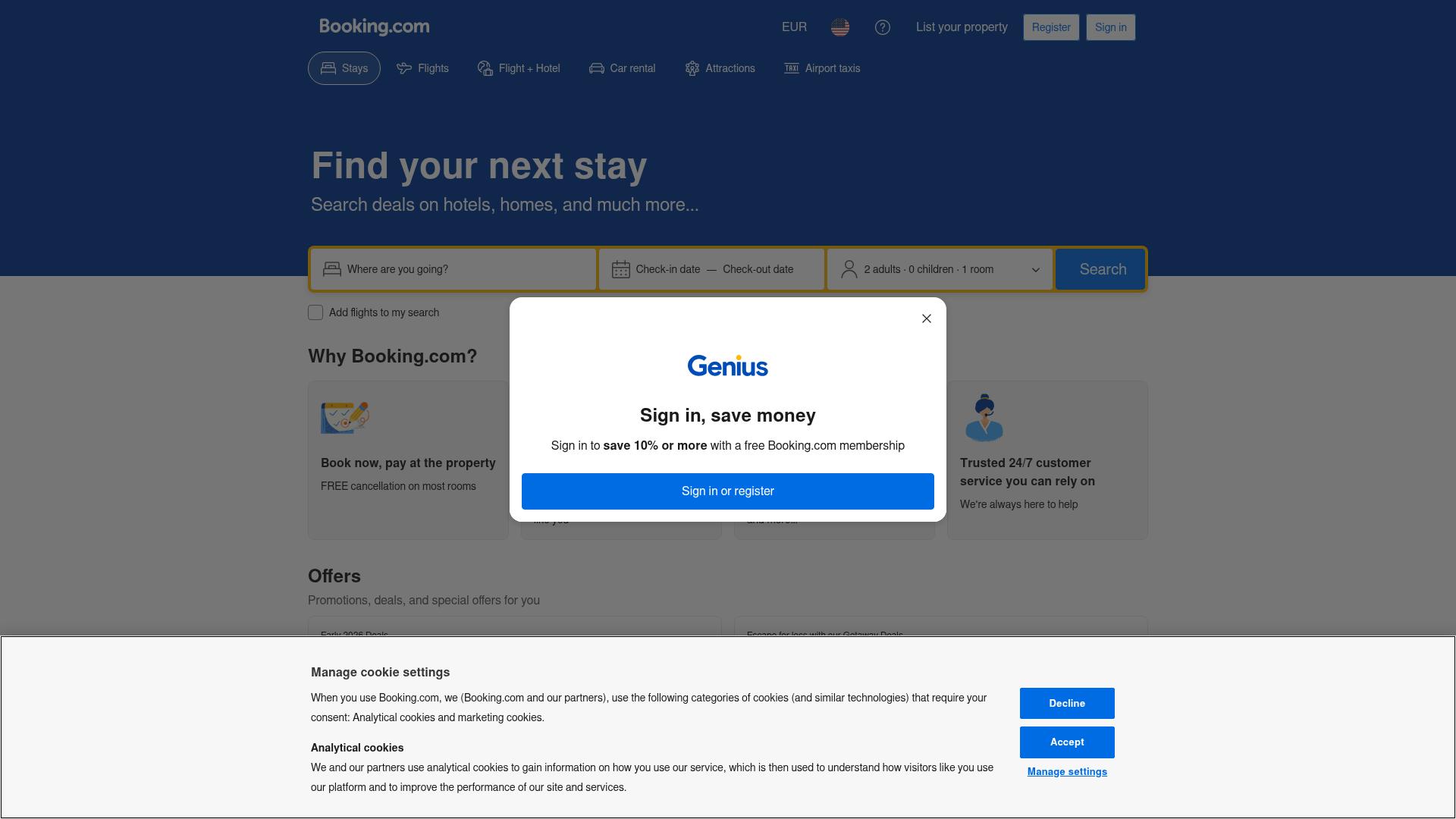
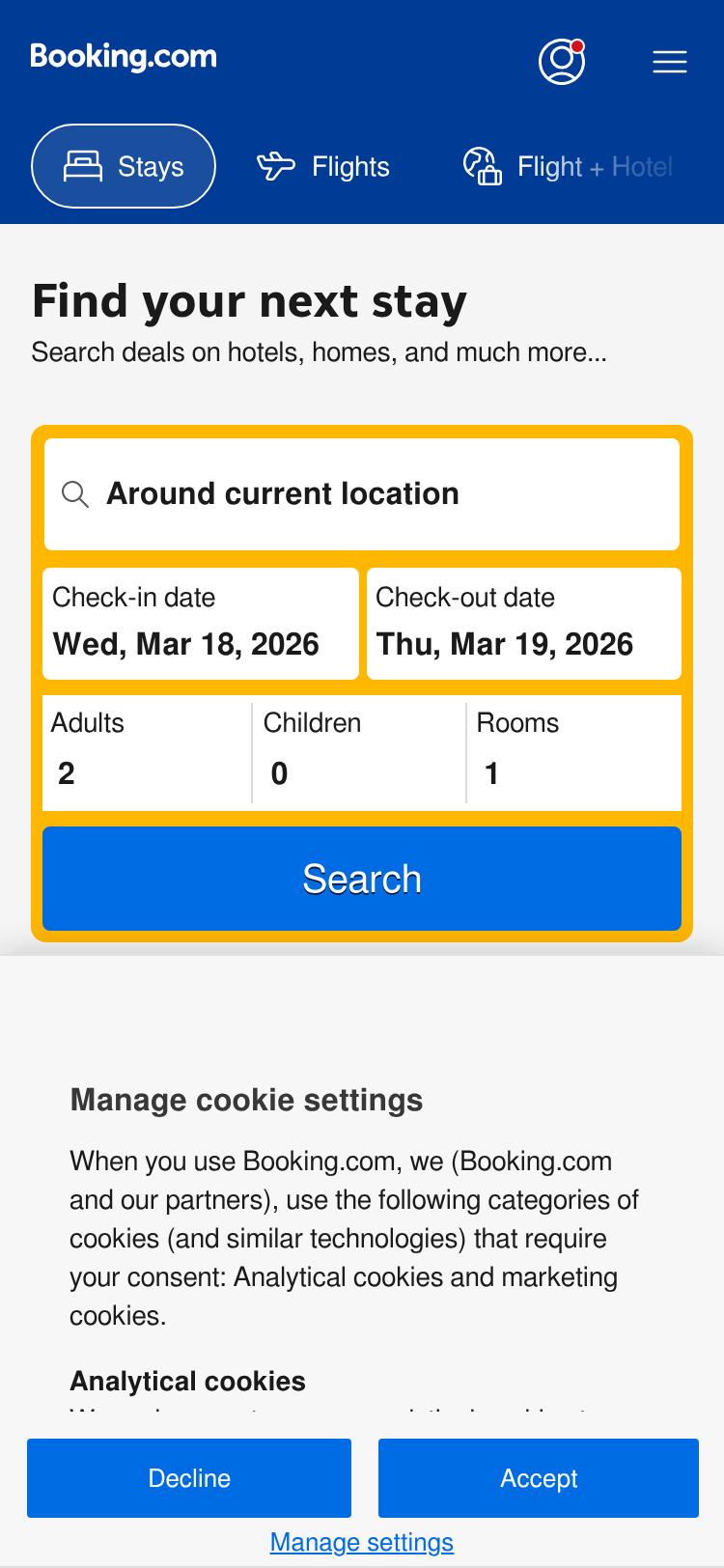
Booking.com scores 90/100 in our scan and is classified as safe. The site uses a valid TLSv1.3 certificate issued by DigiCert Global G2 TLS RSA SHA256 2020 CA1, with HSTS enabled and 226 days remaining before expiry.
SSL Certificate & HTTPS Security
Booking.com uses a valid SSL certificate with TLSv1.3, which is the current modern standard for secure web traffic. The certificate is issued by DigiCert Global G2 TLS RSA SHA256 2020 CA1, a widely trusted certificate authority, and it expires in 226 days. HSTS is enabled, which helps force secure HTTPS connections and reduces the risk of downgrade attacks.
The scan also shows the site is served through Nginx and redirects cleanly to https://www.booking.com/. That is what you want to see on a major commercial platform handling account access and booking data. The HTTPS foundation is strong and consistent with a legitimate, high-traffic service.
Threat Intelligence Results
Every major threat check in the scan came back clean. Google Safe Browsing is clean, URLhaus is clean, and DNS blocklists including Spamhaus and SURBL are also clean. There are no known malicious associations or suspicious infrastructure linked to booking.com in the scan data.
That matters because these sources are commonly used to flag phishing, malware distribution, and spam-related abuse. A clean result across all of them is strong evidence that booking.com is not currently associated with active security threats.
Domain History & Reputation
Booking.com is marked as a known domain with a trusted reputation and is categorized as a travel booking platform. The registrar is MarkMonitor, Inc., which is commonly used by large brands to protect high-value domains. The scanner AI summary also identifies Booking.com as a globally recognized online travel agency owned by Booking Holdings.
The domain creation date is unknown in the scan data, so we do not rely on WHOIS age here. Even without that field, the reputation signals are strong: trusted brand status, legitimate commercial activity, and no malicious indicators in the scan results.
Is Booking.com Legitimate?
Yes. The scan evidence supports Booking.com as a legitimate, safe travel booking platform. The 90/100 safety score, valid DigiCert SSL, clean threat intelligence results, and trusted domain reputation all point in the same direction.
One caution: the scan reports several missing security headers, including X-Content-Type-Options, X-Frame-Options, CSP, Referrer-Policy, Permissions-Policy, COOP, COEP, and CORP. These are worth improving, but they do not override the overall safe verdict or indicate malicious behavior.
Scan Details
Security Headers
Frequently Asked Questions
is booking com safe?
Yes. Our scan rates Booking.com 90/100 and marks it safe. It has a valid TLSv1.3 certificate from DigiCert, HSTS enabled, and no threats detected by Google Safe Browsing, URLhaus, or DNS blocklists.
Does Booking.com have a valid SSL certificate?
Yes. The site uses a valid SSL certificate issued by DigiCert Global G2 TLS RSA SHA256 2020 CA1. The certificate is on TLSv1.3, HSTS is enabled, and it expires in 226 days.
Was Booking.com flagged by malware or phishing blocklists?
No. Google Safe Browsing is clean, URLhaus is clean, and DNS blocklists such as Spamhaus and SURBL are also clean. There is no threat intelligence evidence in this scan showing malicious activity.
Is Booking.com a trusted domain?
Yes. The scan marks booking.com as a known domain with a trusted reputation. It is categorized as a travel booking platform and uses MarkMonitor, Inc. as the registrar, which is common for major brands.
Are there any security issues on Booking.com?
The main issues are missing security headers, including CSP, X-Frame-Options, and Referrer-Policy. These are security hardening gaps, but the site still scores 90/100 and is classified as safe.
Run your own scan
Check any URL instantly
Private, free, no account required. Your scan results are never made public — unlike VirusTotal.