


 urlscanner.online
 urlscanner.online
 filescanner.online
VirusTotal Logs Your Queries. Threat Actors Monitor It.
Full IOC analysis without burning your investigation — DNS, SSL, WHOIS, headers, threat intel & screenshots.
Zero public exposure. No index. No trace.
By submitting, you agree to our and .
Resolves A, AAAA, MX, TXT, NS, SOA & CAA records. Maps the full DNS infrastructure of the target and identifies the resolved IP address.
Inspects the full TLS certificate chain — issuer, expiry, protocol version, cipher suite, HSTS, and OCSP status. Flags expired or misconfigured certificates.
Fetches the HTTP response and audits security headers: HSTS, Content-Security-Policy, X-Frame-Options, X-Content-Type-Options, and redirect chains.
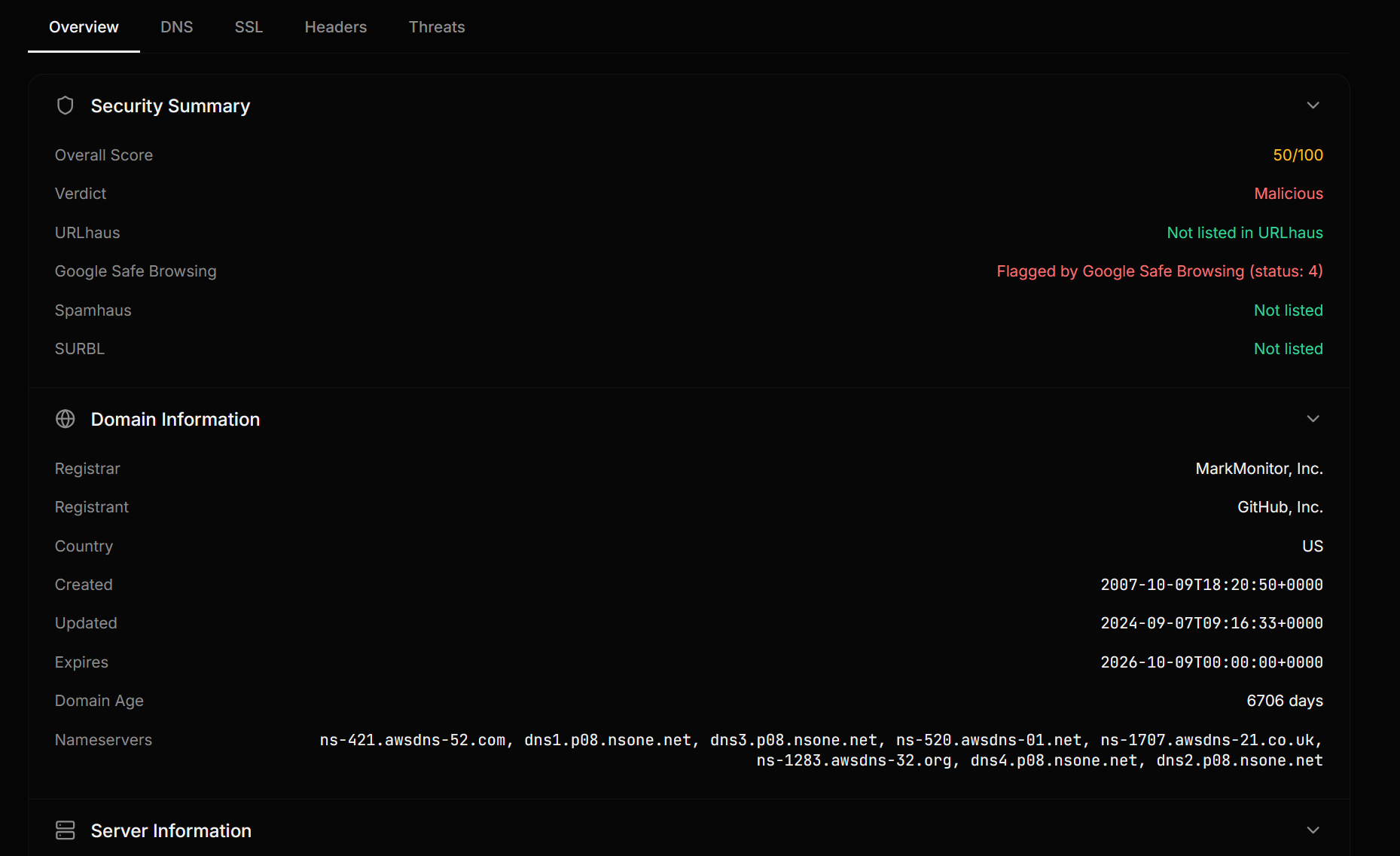
Looks up domain registration data — registrar, creation date, expiry, and domain age. Newly registered domains are flagged as higher risk.
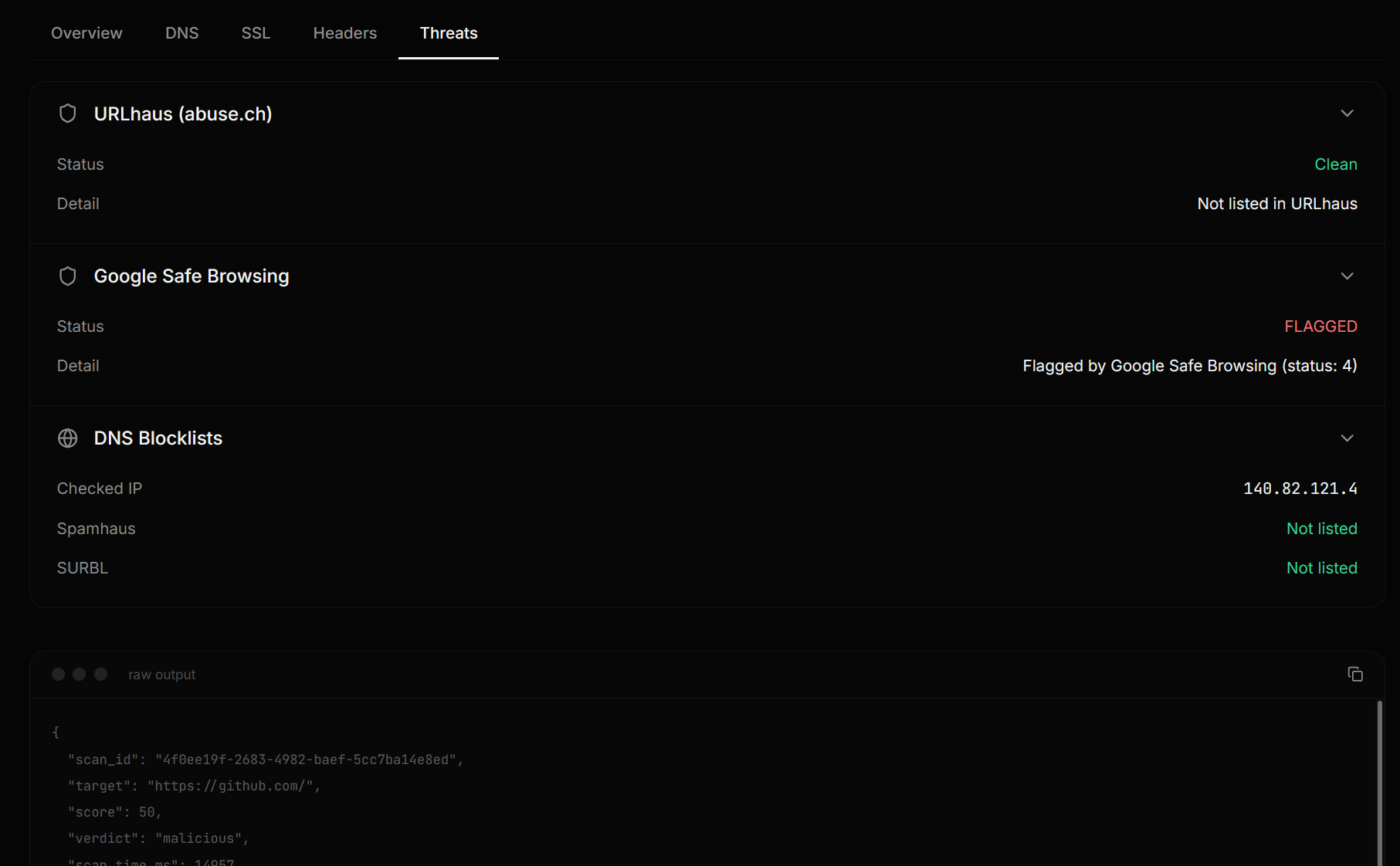
Queries URLhaus, Spamhaus, SURBL DNS blocklists, and Google Safe Browsing to detect known malware, phishing pages, and blacklisted IPs.
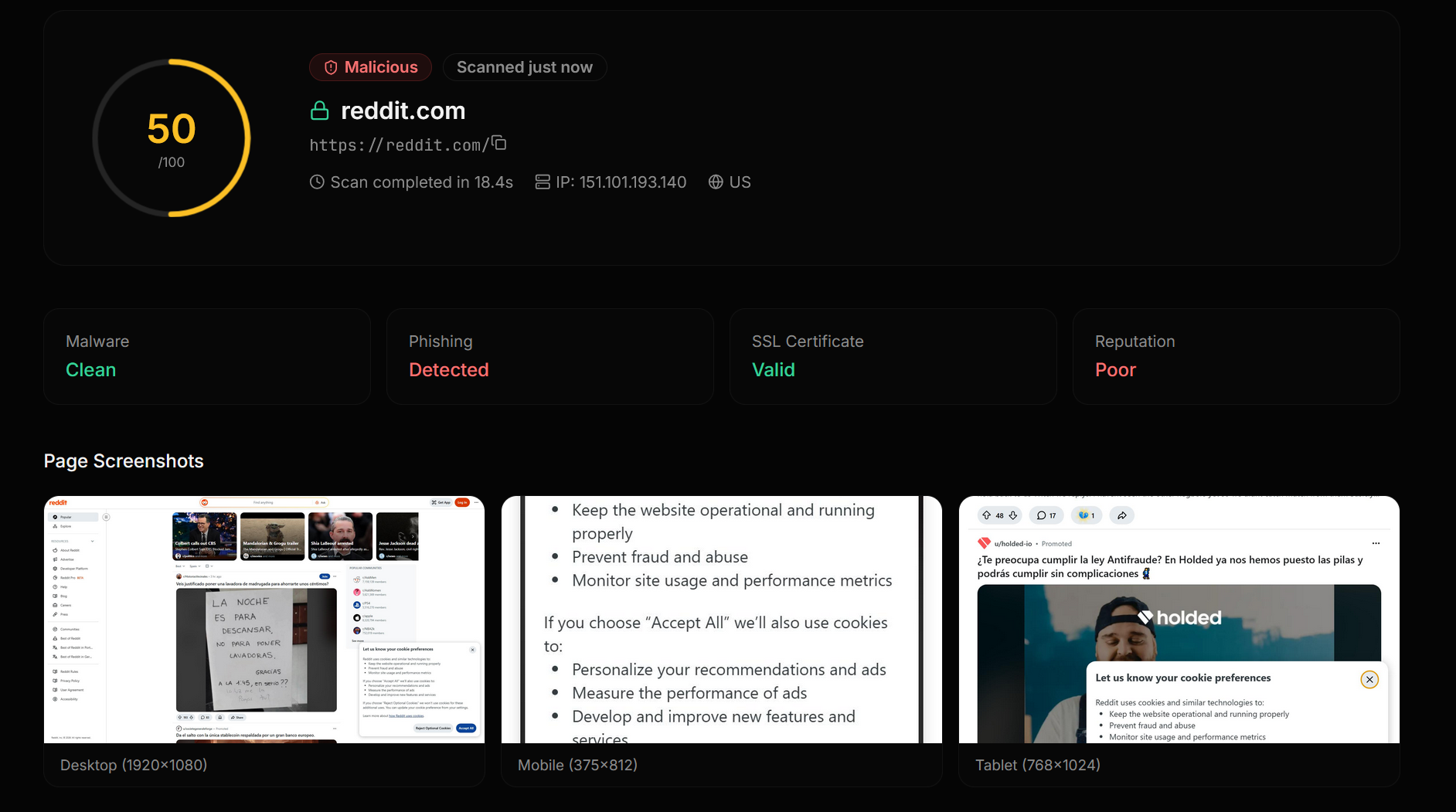
Captures the live page at desktop, mobile, and full-page viewports using a sandboxed headless browser — so you see the site without visiting it.
Fingerprints the technology stack from response headers and HTML — CMS, frameworks, CDN, analytics, and server software. Requires HTTP Headers.
Scans the page HTML and all linked JavaScript files against 20+ YARA-style security rules — detecting obfuscated eval, crypto miners, Magecart skimmers, keyloggers, and more. Requires HTTP Headers.
Runs an AI-powered analysis combining all scan evidence with knowledge of the domain's reputation to produce a risk summary and actionable recommendations.
Searches the web for news, reports, and community mentions about the domain. An AI then synthesizes the findings into a reputation verdict.
Why switch
URLScanner.online vs VirusTotal
VirusTotal is a powerful threat intelligence platform — but every free-tier URL you submit becomes permanently searchable by other users and shared with antivirus vendors. URLScanner.online gives you the same depth of analysis with zero exposure.
The core difference: When you scan a sensitive internal URL, a client's domain, or a confidential link on VirusTotal, that submission is indexed and can be found by anyone with a paid account. On URLScanner.online, your input is never stored publicly, never indexed, and never shared.
 URLScanner.online
Feature comparison based on VirusTotal's publicly documented free-tier behavior as of 2025. VirusTotal is a trademark of Google LLC.
How it works
Scan any URL for threats in seconds
Our free online URL scanner checks links against multiple threat databases and performs deep security analysis — results in under 15 seconds.
Enter any URL, domain or IP
Paste the link you want to check into the scanner. We accept full URLs, bare domains, and IP addresses. Our URL scanner validates and normalizes the input automatically.
Real-time security analysis
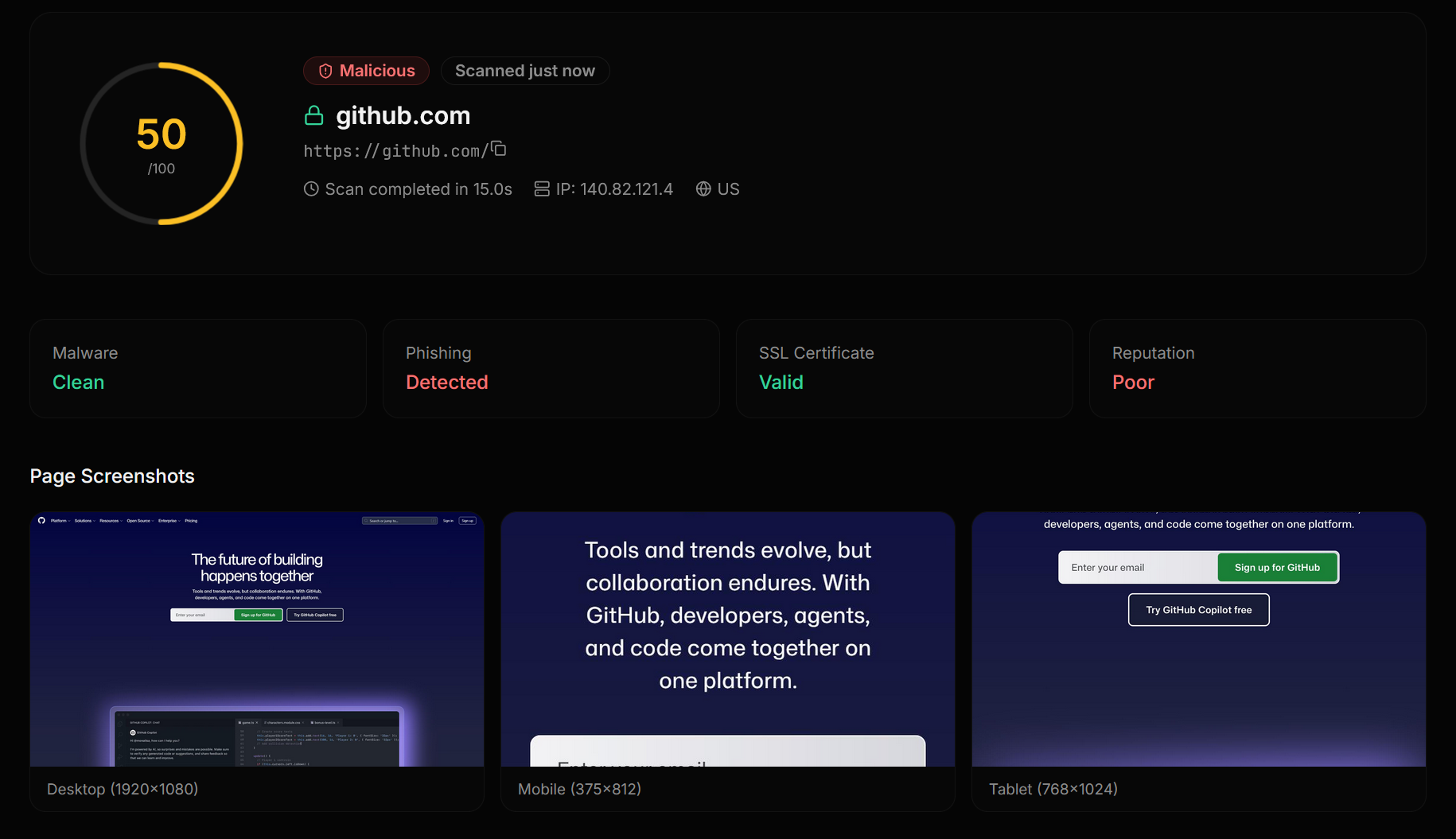
The scanner runs 8 parallel security checks: DNS resolution, SSL certificate analysis, HTTP header inspection, WHOIS lookup, threat intelligence queries against malware and phishing databases, and multi-viewport screenshots.
Get your detailed security report
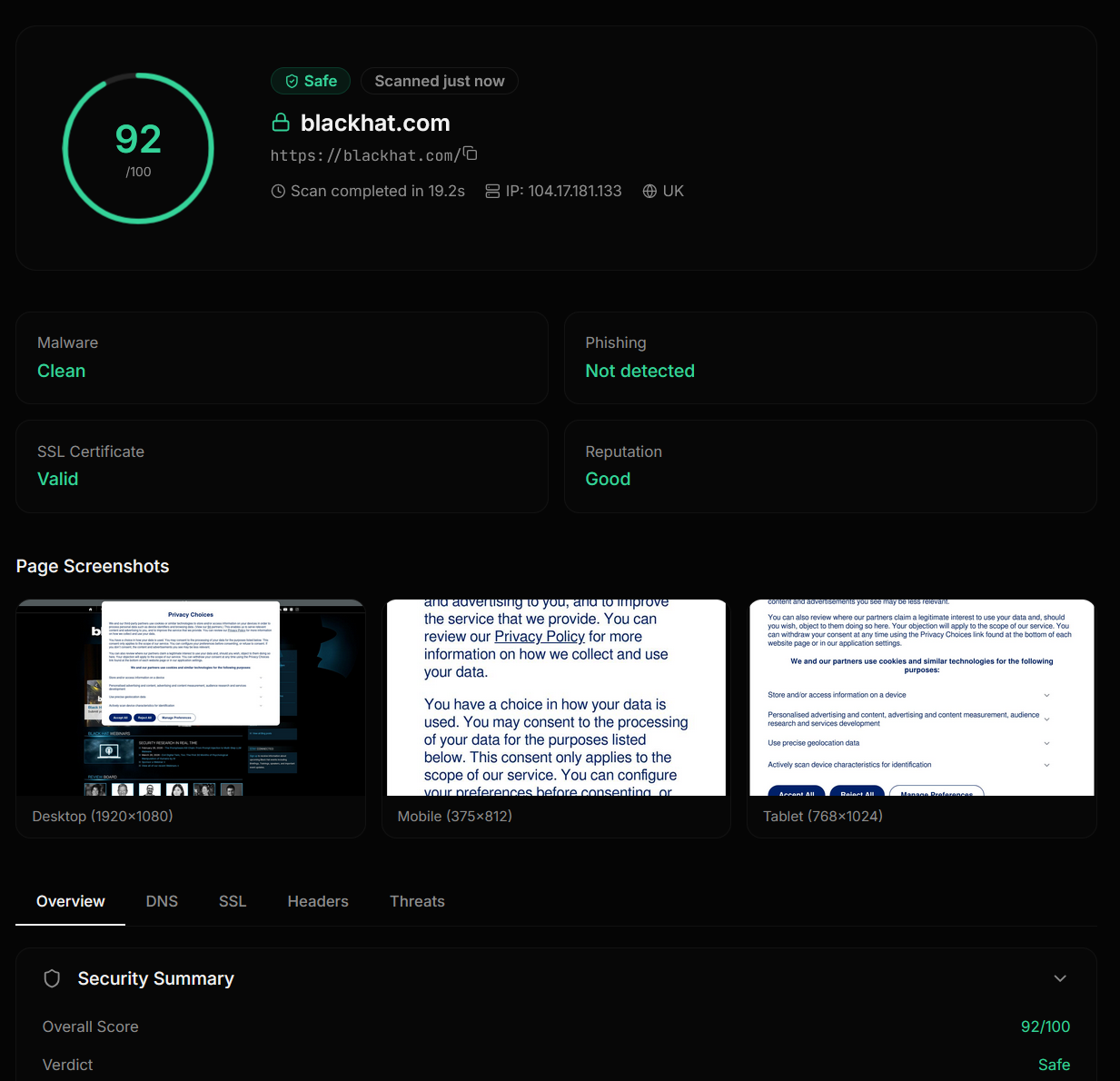
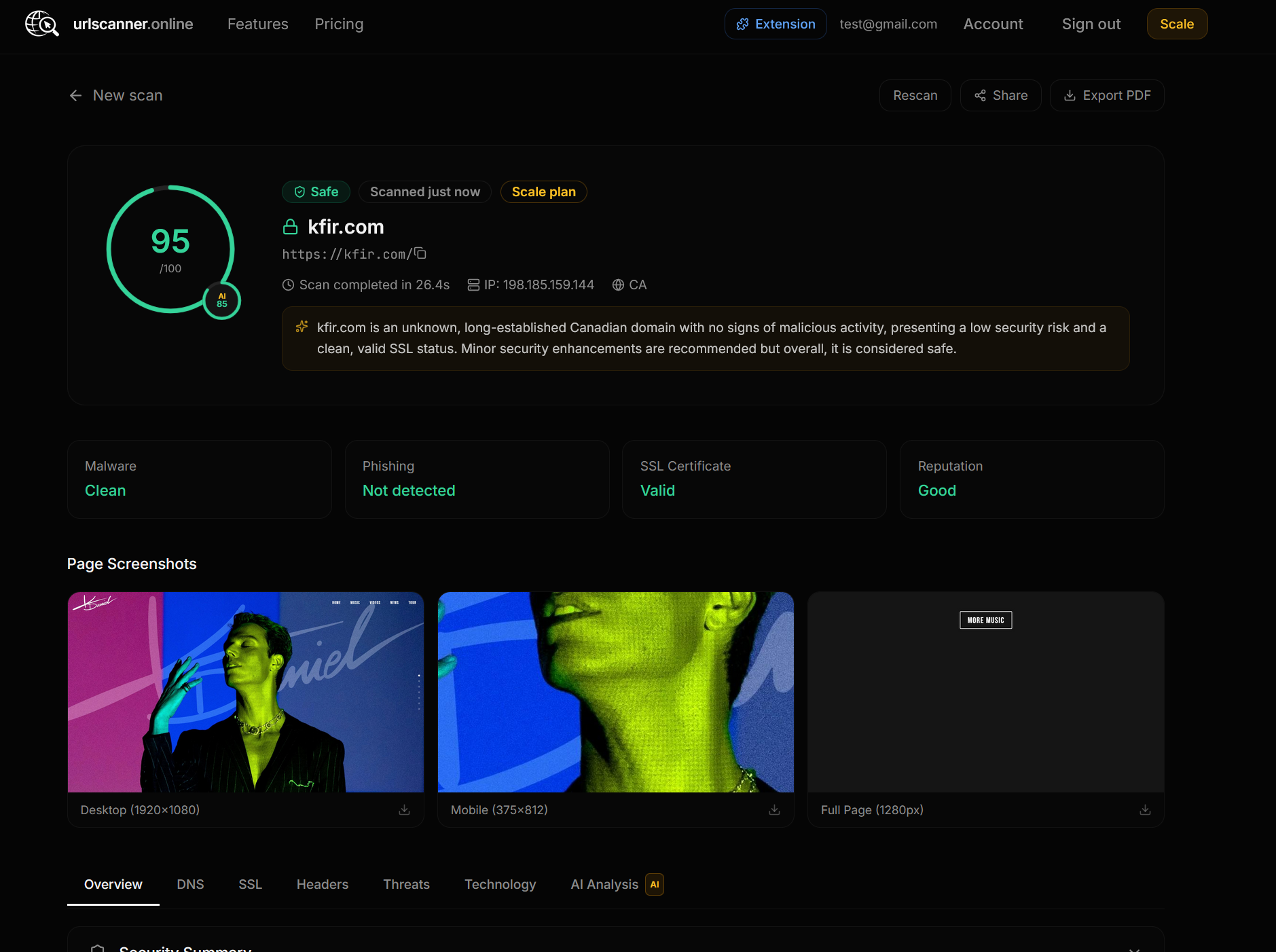
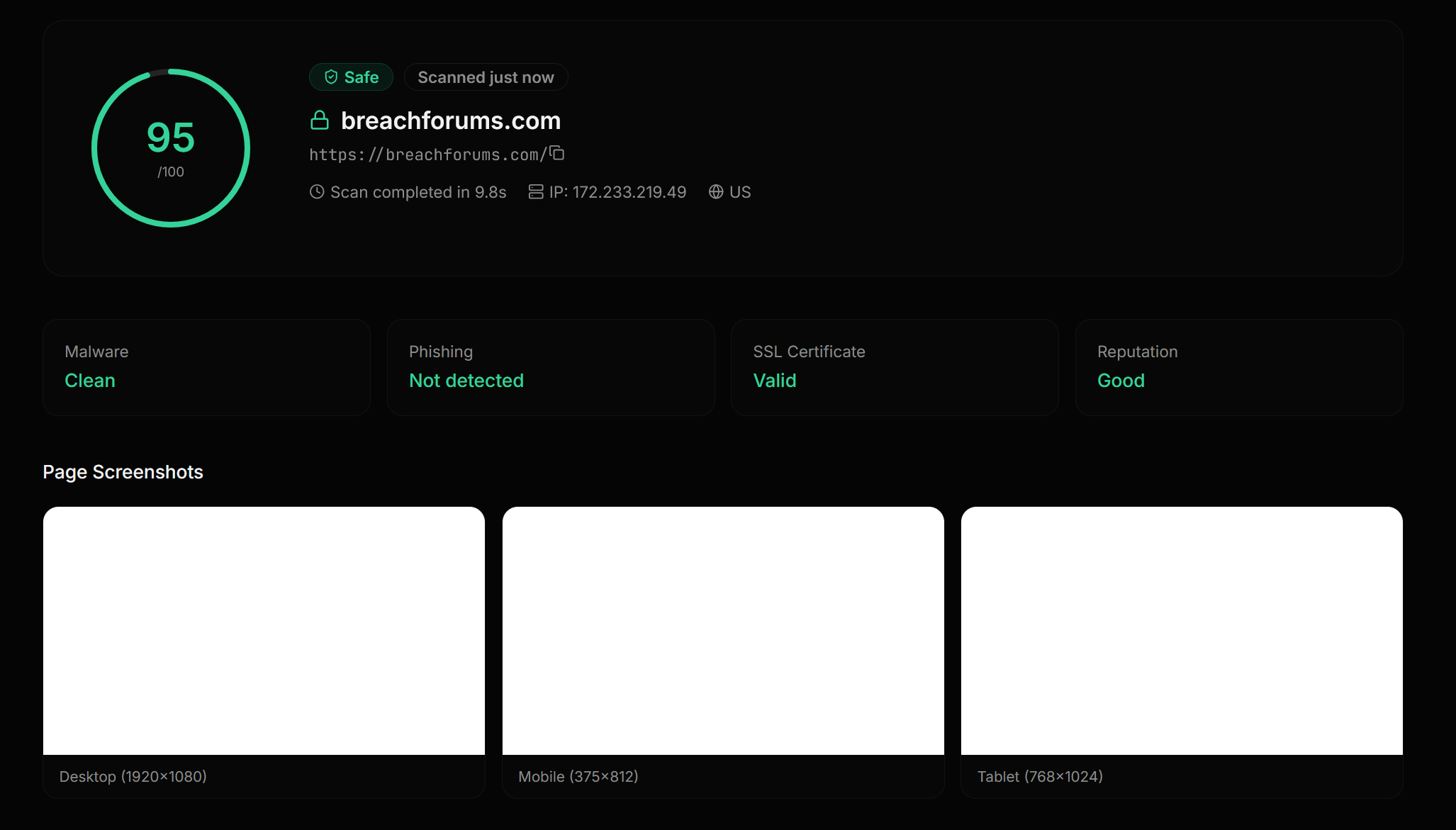
Receive a comprehensive report with a safety score from 0-100, a clear threat verdict, and full breakdown of every security check. Know instantly whether a link is safe, suspicious, or malicious.
Pricing
Start free.
Scale without getting ripped off.
Every paid plan unlocks Aprensec Pro — URL Scanner, File Scanner, IP Scanner & Intelligent Search (2 launching soon). No contracts. Cancel any time.
Full access to all Aprensec Online Analysis Tools: URL Scanner · File Scanner · IP Scanner (soon) · Intelligent Search (soon)
Shared quota across all tools. No extra charge.
No card. No install. Just start.
- 10 scans/day — both toolsunified pool
- PDF scan reports
- API access
- Browser extension
Scan when you need it. No subscription.
- 250 scan creditsnever expire
- PDF scan reports
- API access
- Browser extension
Full Aprensec Pro access — all tools, one analyst.
first month — then €29/mo
- 100 scans/dayshared pool
- PDF scan reports
- API access
- Browser extension
The full stack for teams who can't afford an incident.
- 2000 scans/dayshared pool
- 20 seats€580 standalone
- PDF scan reports
- API access
- Browser extension
- Slack/Discord bot alerts
- Onboarding call
URL scanning
File analysis
Need white-glove onboarding, unlimited API, or custom SLA? Contact us →
URL Scanning Tools
Comprehensive URL security scanning
Our URL scanner combines multiple security checks into one fast, free scan — from malware detection to SSL analysis.
—
URLs scanned
<15s
Avg scan time
Malware & Virus Detection
Scan URLs against URLhaus, Spamhaus, SURBL, and Google Safe Browsing databases. Detect malware, viruses, and known threat indicators in real time.
SSL Certificate Analysis
Full certificate chain inspection, TLS protocol version checks, HSTS validation, cipher suite analysis, and certificate expiry monitoring.
DNS Record Lookup
Complete DNS enumeration — A, AAAA, MX, TXT, NS, SOA, and CAA records. Identify the full DNS infrastructure behind any domain.
Phishing Detection
Multi-layered phishing analysis using DNS blocklists, domain age checking, SSL validation, and threat intelligence to identify fraudulent websites.
WHOIS Domain Lookup
Domain registration data including registrar, creation date, domain age, and expiry. Young domains are flagged as higher risk for cyber security threats.
Website Safety Score
Weighted security score from 0-100 based on SSL, headers, threats, and domain age. Clear verdict: safe, suspicious, or malicious.
HTTP Header Inspection
Evaluate critical security headers — HSTS, Content-Security-Policy, X-Frame-Options, X-Content-Type-Options, and CORS configuration.
Website Screenshots
Safe visual capture at desktop, tablet, and mobile viewports. Preview any website without visiting it directly — see what the page looks like before you click.
Instant Free Scans
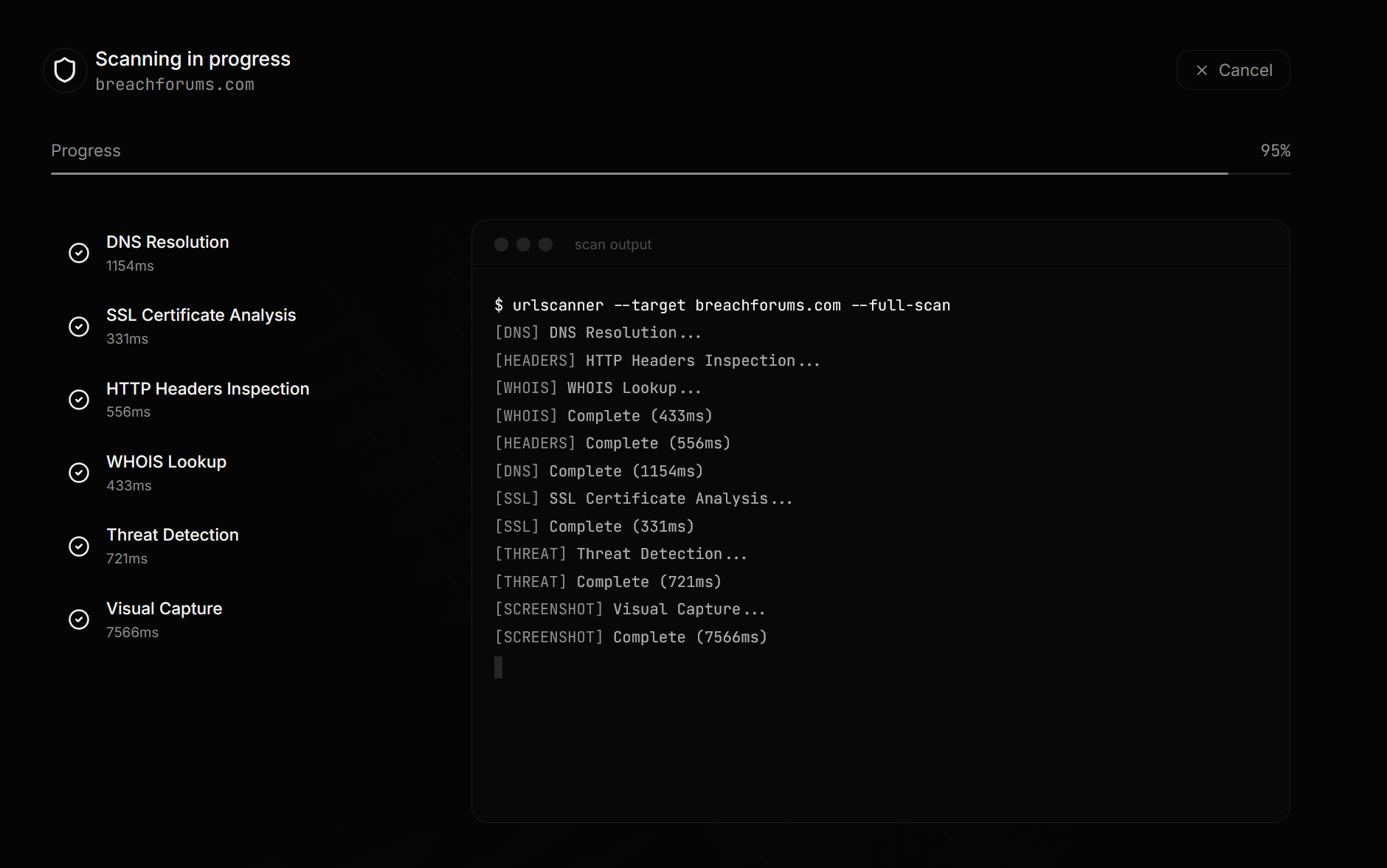
Most scans complete in under 15 seconds. Free scans with no account required. Real-time terminal output shows every step of the analysis as it happens.
FAQ
Frequently asked questions about URL scanning
Everything you need to know about scanning URLs for malware, phishing, and cyber security threats.
A URL scanner is an online security tool that analyzes websites and links for potential threats. URLScanner.online performs 8 different security checks on any URL, domain, or IP address — including DNS resolution, SSL certificate analysis, HTTP security header inspection, WHOIS domain registration lookup, threat intelligence queries, and multi-viewport screenshots. All scans are performed server-side so your device is never exposed to potentially malicious content.
Simply paste the URL into the search bar above and click Scan. URLScanner.online will automatically check the URL against multiple malware databases including URLhaus, Spamhaus DNS blocklists, SURBL, and Google Safe Browsing. You'll receive a detailed security report with a safety score out of 100 and a clear verdict within seconds.
Yes, URLScanner.online is free. Guests get 1 scan without signing up; free accounts get 10 scans per day including PDF export and API access. Each scan includes full threat detection, SSL certificate analysis, DNS records, HTTP header inspection, WHOIS data, technology detection, and multi-device screenshots.
Yes. The scanner uses multiple layers of phishing detection: DNS blocklist queries (Spamhaus, SURBL), Google Safe Browsing transparency reports, URLhaus malware database lookups, SSL certificate validation, domain age analysis via WHOIS, and HTTP security header inspection. Newly registered domains with missing security headers and blocklist matches are flagged as potential phishing sites.
Absolutely. All URL scanning is performed on our servers — your browser never connects to the target URL directly. We use isolated headless browsers with sandboxed environments and secure DNS resolution. You can safely scan any suspicious link without exposing your device, network, or personal information to potential threats.
URLScanner.online runs 8 security modules: (1) DNS Resolution — A, AAAA, MX, TXT, NS, SOA, CAA records, (2) SSL/TLS Certificate Analysis — certificate chain, protocol version, cipher suites, expiry, (3) HTTP Security Headers — HSTS, CSP, X-Frame-Options, X-Content-Type-Options, CORS, (4) WHOIS Lookup — domain registration, registrar, creation date, domain age, (5) Threat Detection — URLhaus, Spamhaus, SURBL, Google Safe Browsing, (6) Visual Capture — screenshots at desktop, tablet, and mobile viewports, (7) Security Scoring — weighted score from 0-100, (8) Verdict Classification — safe, suspicious, or malicious.
URLScanner.online combines multiple scanning engines into a single real-time analysis. Unlike basic link checkers that only query one database, we run parallel checks across DNS, SSL, HTTP headers, WHOIS, and multiple threat intelligence sources simultaneously. You get a comprehensive security report with a clear safety score — not just a pass/fail result. The real-time terminal output shows every step of the analysis as it happens.
The URL scanner detects malware distribution sites, phishing pages, domains on DNS blocklists (Spamhaus, SURBL), URLs flagged by Google Safe Browsing, sites with invalid or expired SSL certificates, domains using outdated TLS protocols, websites missing critical security headers (HSTS, CSP), newly registered domains commonly used in attacks, and suspicious redirect chains.